
Practical help for business owners & leaders
Your business should be easier to run.
Getting a straight answer takes too long. People keep working around the same problems. You’ve bought software, hired good people, and still have to chase things to get them done.
I help you find what’s getting in the way and work out what needs to change.
You don’t have to know what the problem is. That’s where I come in.
Talk to AndrewA free 20-minute conversation. Tell me what keeps frustrating you.
Does this sound familiar?
You get things done.
It just takes more effort than it should.
It’s easy to accept these as part of running a business. They’re also worth questioning.
- “I ask a simple question and get three different answers.”
- “If I don’t follow up, things don’t happen.”
- “We keep adding people, but nobody seems less busy.”
- “We bought something to make this easier. People still work around it.”
- “Only one person knows how that works. What happens when they’re out?”
- “I just want things to work without another project landing on my desk.”
You don’t need to choose a service or come with a solution. Bring me a situation you’d like to be different.
How I help
I help you get to the bottom of it.
What looks like a people problem or a software problem may have several causes. We start with what actually happens in your business.
Tell me what keeps happening.
What takes too long? What keeps going wrong? What do you wish you didn’t have to keep checking? You can explain it in your own words.
I look at how it really works.
If we agree to work together, I talk with the people doing the work, follow how things get done, and look at the information and tools they rely on.
You get a clear way forward.
I explain what’s causing the trouble, what to change first, and what you can keep. You get written recommendations your team or an implementation partner can act on.
If paid work makes sense, we agree on what I’ll do, what you’ll receive, the timing, and the price before it starts. Making software changes is agreed separately.
See what a written assessment includesYou’ll work directly with me
I know what it’s like to be the person everyone turns to.
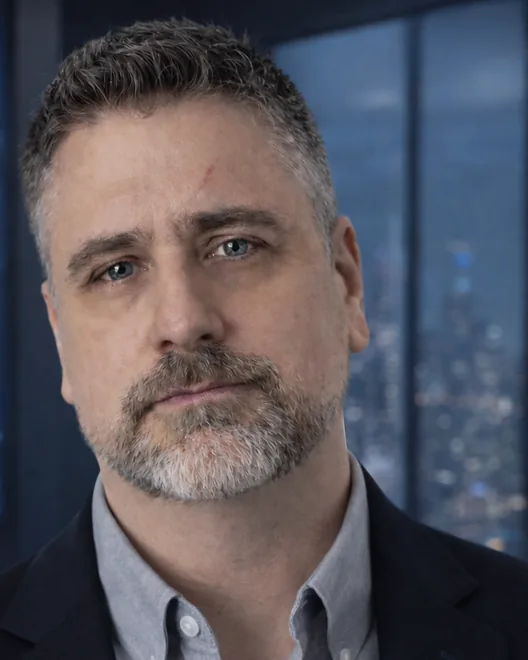
I’m Andrew. I’ve owned and operated small businesses since 1999 and spent more than 20 years working on complex business systems inside a Fortune 50 enterprise.
I bring both perspectives: the day-to-day demands of keeping a business running, and the experience to look beneath the surface when the pieces aren’t working together.
I don’t resell third-party software or take platform commissions. Alongside consulting, I’m developing GenXus to make solution architecture more accessible. Recommendations start with what your business needs.
Business systems and operations consulting, based in Ballwin. On-site across St. Louis and remote nationwide.
More about AndrewBefore we talk.
What if I can’t explain the problem?
That’s fine. Tell me about something that frustrates you, takes too long, or needs your attention more often than you think it should. I’ll ask questions to help us understand it.
Will I have to buy new software?
We start by understanding the work and what you already have. The answer may be a clearer process, better use of your existing tools, or a change in who does what. New software is one possibility, not the starting point.
What does it cost?
The first 20-minute conversation is free. If there’s useful paid work to do, we agree on the scope and fee first. Full business assessments have a published planning range of $5,500–$18,500, with $5,500–$11,500 for businesses under 100 employees. You don’t need to choose an assessment before we talk. Read the pricing details.
GenXus: from business knowledge to working solutions.
Business experts know their operations. Turning that knowledge into a working technical solution can still be difficult. AAG is developing GenXus to help people describe a need, assess options and costs, approve a plan, and move toward working software.
Founder-led consulting is our initial path to delivering value and learning from real business workflows. Andrew leads the work today, personally handling the architecture and implementation steps that GenXus cannot yet perform. The goal is to make that expertise increasingly repeatable through software, with people retaining control of important decisions.
GenXus is currently in private development and is not publicly available. Consulting engagements are available now, with scope and responsibilities agreed before work begins. An engagement does not require you to adopt GenXus.
Let’s start with what’s bothering you
You don’t have to figure it out first.
Tell me what keeps happening and what you wish worked better. We’ll work out whether I can help.
Talk to AndrewFree 20-minute conversation · No obligation